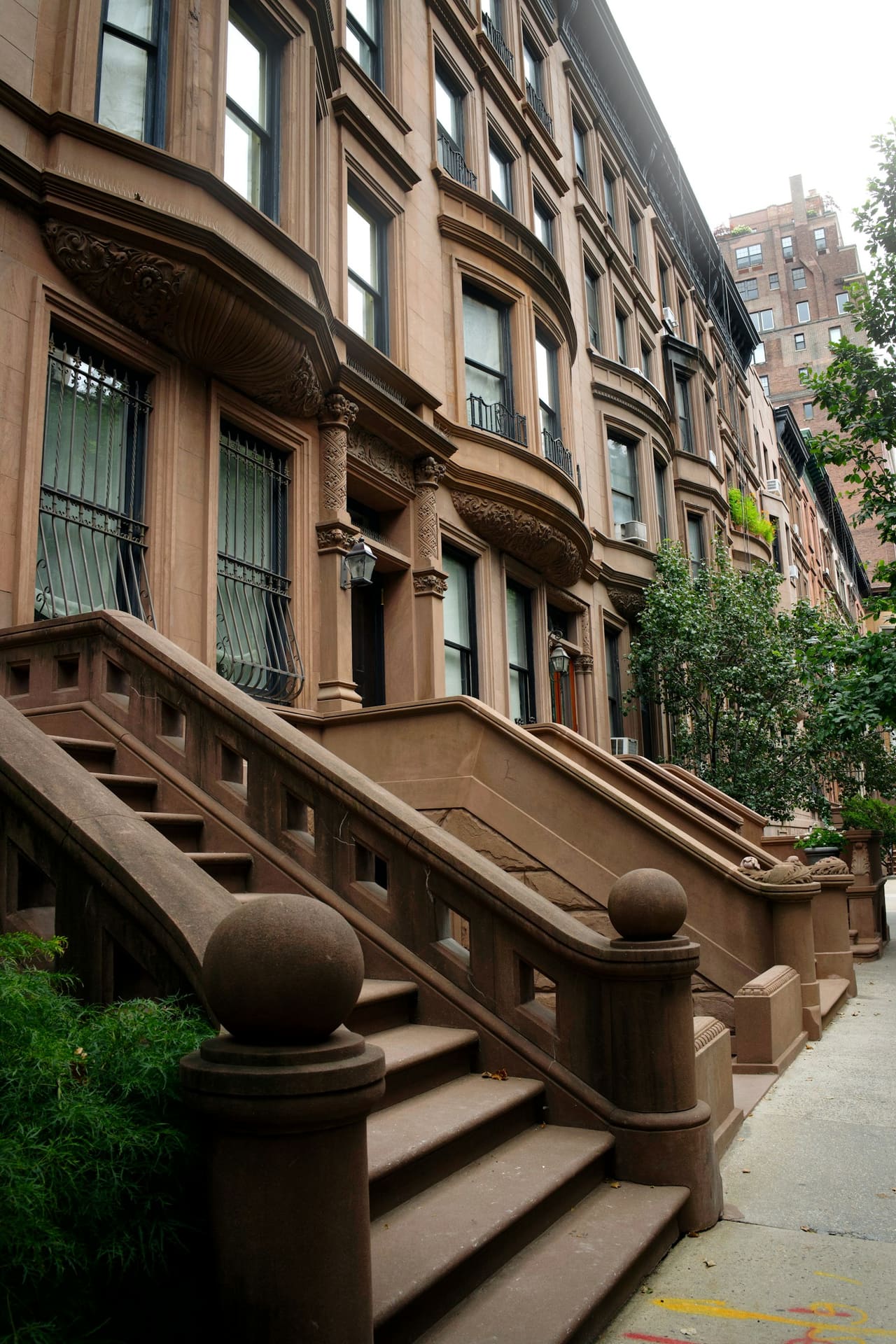
The townhouse is the only place in New York where a kitchen project answers to no board at all. No alteration agreement, no wet-over-dry doctrine, no freight elevator calendar — you own the walls, the risers, and the schedule. What replaces the board is a different set of forces: the Landmarks Preservation Commission (for a fifth of Manhattan), the structural realities of 150-year-old row construction, and a scale of project where the kitchen is usually one chapter of a gut renovation. Different game, different playbook.
What freedom actually buys you
Everything a co-op board forbids is on the table: kitchens moved to the garden level, kitchens opened across the full parlor-floor width, double islands, gas reconfiguration, ventilation runs to the roof. For European systems this is the full-expression environment — the compositions the flagship showrooms build to show off (Boffi’s monoliths, bulthaup b2’s freestanding workshop, full-wall systems) were designed for exactly this kind of space. The constraint shifts from permission to design discipline: with no board forcing restraint, townhouse kitchens fail by overreach more often than by compromise.
Landmarks: the board you might still have
Roughly 20% of Manhattan sits in historic districts or holds landmark designation. The good news is broadly misunderstood: LPC governs what’s visible from the street, not your interior. You can gut a landmarked brownstone’s kitchen level completely without aesthetic review — the commission’s scrutiny lands on facades, visible rooflines, and rear elements visible in the 360-degree street sweep. Where kitchens collide with LPC is at the edges: rear-extension dreams, new flue and vent penetrations on visible elevations, garden-level window changes. If your kitchen plan touches the envelope, LPC filing joins the critical path — budget months, not weeks, and an architect who files with the commission regularly.
The structural reality
Townhouse kitchens are usually part of Alteration Type 2 (or full gut) territory: plumbing moves trigger DOB permits; removed walls trigger structural engineering; underpinning a cellar dig triggers everything. Row-house construction adds its own facts — party walls you share with neighbors, joists that have opinions after a century, floors even less level than prewar apartment stock. The installation-quality argument from the prewar guide applies doubled: this is the environment where factory-trained crews and generous scribe allowances separate the finished project from the expensive approximation. Full gut renovations run 12–18 months; the kitchen is sequenced late, so its factory clock (10–16 weeks) hides comfortably inside the project — one of the few NYC scenarios where the European lead time costs nothing.
Scale and budget
Townhouse kitchens run larger than apartment kitchens — more linear feet, bigger islands, often a second prep or catering kitchen — so the cost guide ranges shift up a band: cabinetry budgets that start where apartment projects end, and all-in kitchen numbers of $250,000–$500,000+ inside multi-million-dollar gut renovations. The consolation is proportional: as a share of a townhouse gut, the kitchen premium for a top European system is small, and it’s the room the whole house is judged by.
The delivery day nobody pictures
No freight elevator also means no freight elevator: containers unload at the curb, cabinetry walks up the stoop or crane-rigs over it, and DOT street permits enter your vocabulary if a crane is involved. Trivial next to the rest of a gut project — but tell the dealer it’s a townhouse at design stage, and confirm their delivery team has done stoops, not just loading docks.
The short version
Townhouses trade approval friction for execution complexity. The kitchen can be anything; the building will resist in physical rather than procedural ways; LPC matters only if you touch the visible envelope. Pick the school and the brand with total freedom — then spend the freedom on discipline.
Townhouse project? Save the whole program in the curator — main kitchen, prep kitchen, garden level — and see which houses can compose across all of it.